
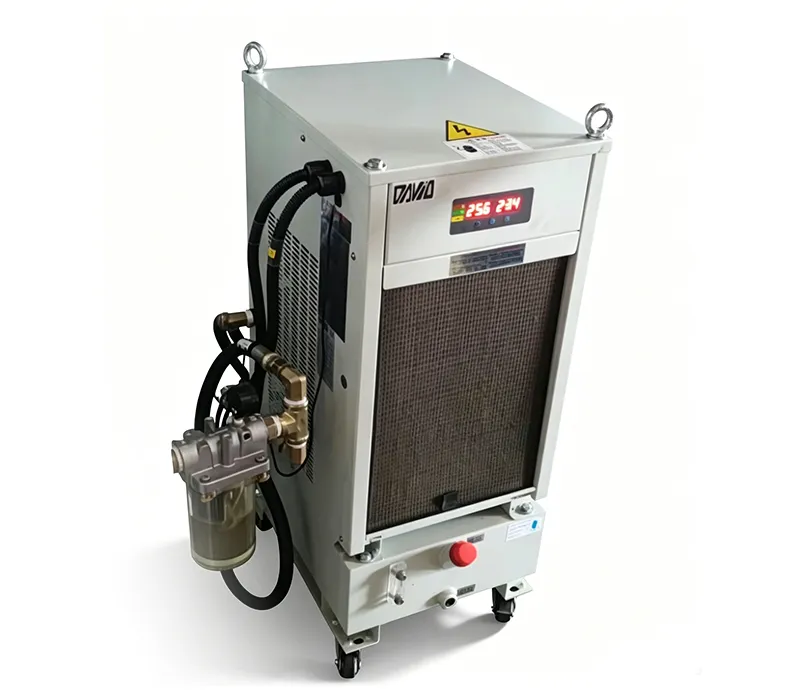
Ball-Screw Fluid Chiller
Constant Temperature Cooling System for Machine Tools
- Process Chiller Type: Oil medium, air-cooled chiller
- Cooling Capacity: 1.5-3.5kW
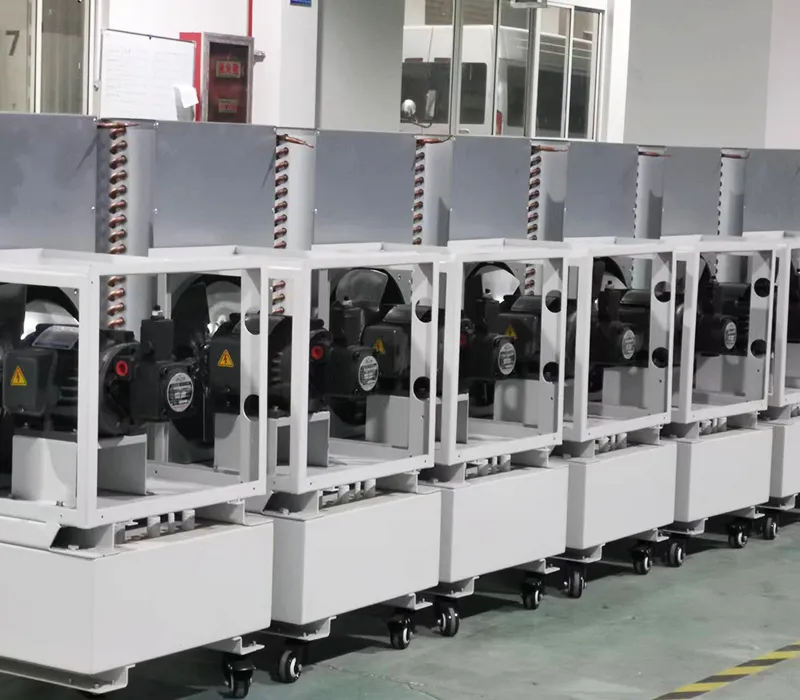
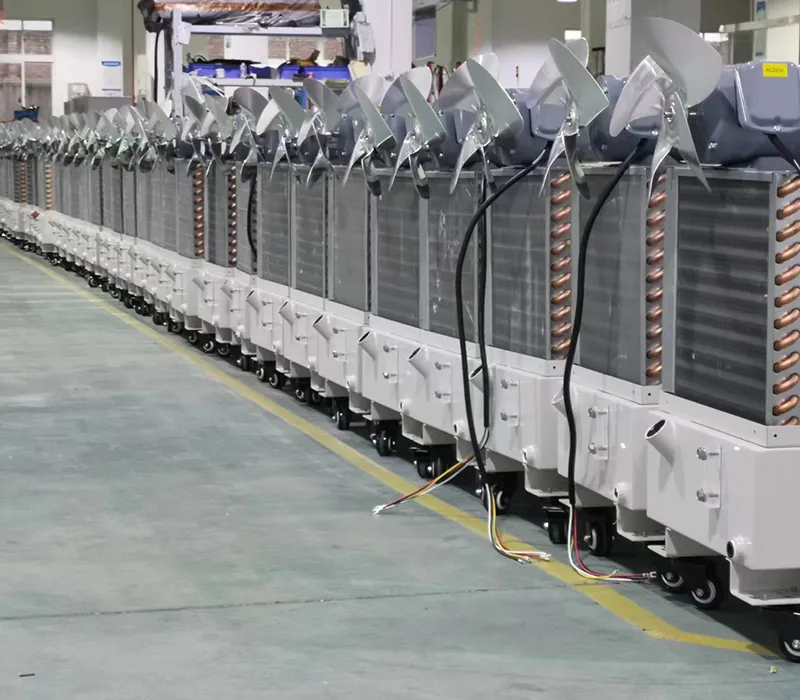
Ball-screw fluid chillers circulate cooling oil through the interior cavity of hollow ball screws, which are typically used in precision machine tools. Heat from the screw wall is absorbed as cooling oil circulates through the cooling unit, which helps reduce temperature buildup during machining. Stable temperature control reduces heat buildup in the spindle, helping keep machining accuracy consistent during continuous operation in machining centers, grinders, engraving machines, stamping machines, milling machines, turning-milling machines, and other precision equipment.
| Model | AOH-15PTS-3225 | |
| Cooling Capacity (50Hz) | 1500W | |
| Power | Main circuit | Three Phase AC 220V 50Hz |
| Control circuit | Single Phase AC 26V 50Hz | |
| Enclosure Paint | RAL-7035 | |
| Dimensions | 365×445×850mm | |
| Compressor | WHP01800RCV-H3BU | |
| Evaporator | Aluminum fins with copper tubes | |
| Condenser | Aluminum fins with copper tubes | |
| Fan Blade | Propeller fan blade | |
| Pump | Pump type (with motor) | 3-Phase, induction motor 1/4 HP (0.19 kW), 4-Pole |
| Rated flow (50Hz) | 6.5 L/min | |
| Temperature Control | Select one of the following two modes: Differential temperature control mode (adjustable range: -9.9°C to +9.9°C) Constant temperature control mode (inlet temperature setpoint range: 10°C to 40°C) | |
| Refrigerant Control | Electronic expansion valve | |
| Protection Devices | Compressor protection Overcurrent protection Phase reversal protection Restart prevention timer High liquid temperature protection Low liquid temperature protection | |
| Applicable oil | Lubricating oil, spindle oil | |
| Refrigerant | R22 | |
| Temperature Range | Room temperature | 10°C to 45°C |
| Inlet temperature | 10°C to 40°C | |
| Connection Size | Inlet | PT 1/2" |
| Outlet | PT 1/2" | |
| Fluid filling port | G 1" | |
| Drain port | PT 1/2" | |
| Weight | 60 kg | |
| Standard Accessories | User manual | |
- A 15KG high-pressure circulation system pushes oil through the hollow ball screw and nut area, controlling temperature within ±0.5°C so the screw keeps its shape during movement and does not expand under heat.
- The PID control system tracks temperature changes during operation and adjusts cooling continuously, preventing heat from building up and helping the machine keep more stable and accurate machining performance.
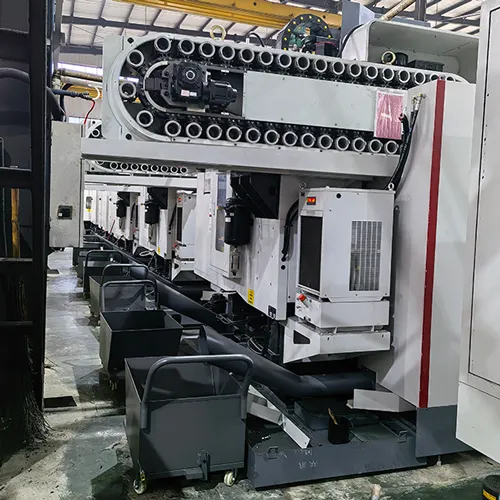
- Client: A mold frame machining enterprise in Wuxi, China
- Chiller Type: Hollow ball-screw constant temperature chiller
- Application: Vertical machining center
- Industry: Mold frame machining industry
A mold frame machining enterprise in Wuxi, China was experiencing unstable batch production quality due to seasonal temperature changes, which caused thermal variation in the ball screw during operation and led to occasional machining inconsistencies. To solve this issue, they needed better temperature control in their vertical machining centers, which is why we provided a suitable solution by upgrading their existing cooling system to a hollow ball screw and a ±0.5°C constant temperature oil chiller was installed to improve temperature stability in the vertical machining center, resulting in a higher product yield at this mold frame factory.